
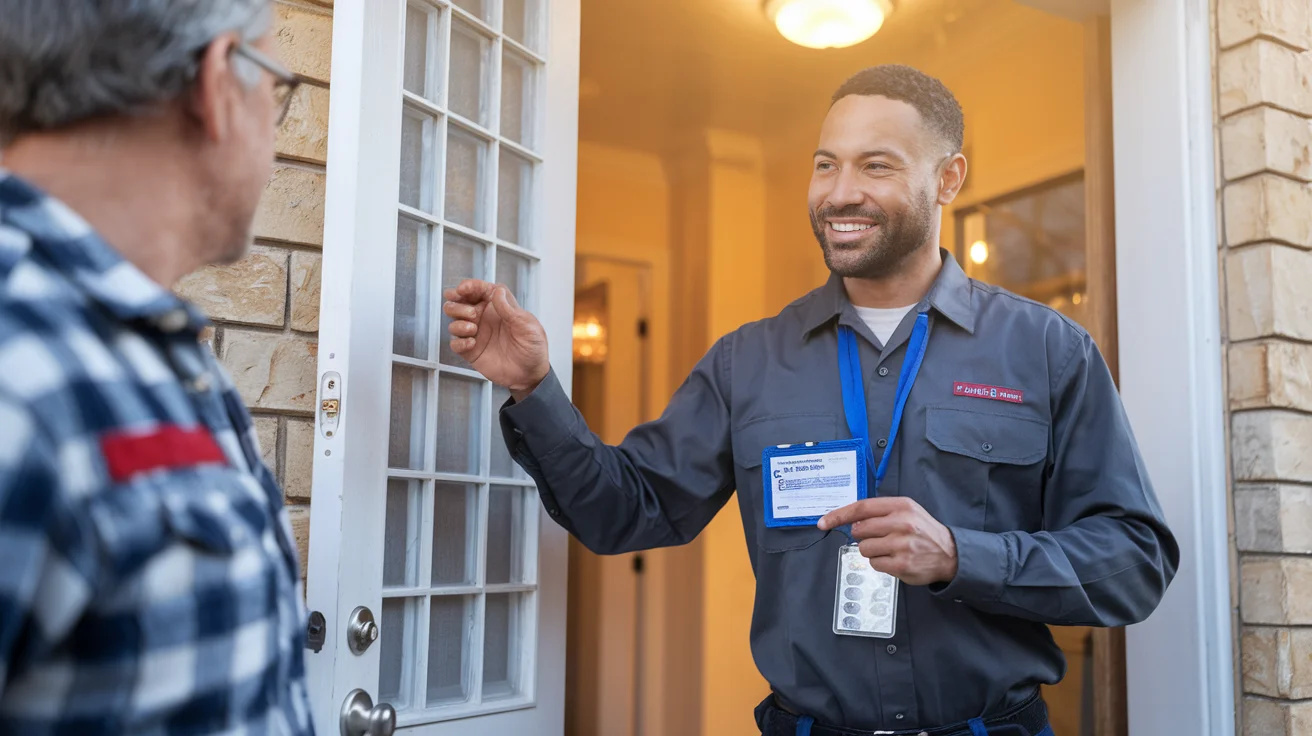
The HVAC industry has a trust problem, and North Texas summers make it worse. When your AC dies at 4 PM on a 103-degree July afternoon in Plano or Frisco, you're in no position to evaluate a stranger's diagnosis. You can't see refrigerant levels, can't read electrical loads, and can't verify whether that "cracked heat exchanger" is real or fabricated. Some contractors count on exactly that. Every summer, storm-chasing operators and door-knockers flood Collin and Denton counties with cheap-inspection offers designed to "find" thousands of dollars in problems that often don't exist.
Why Texas Is a Target
Urgency
When your AC fails in 100°F heat, you'll agree to almost anything. Scammers exploit this desperation.
High Stakes
HVAC systems are $5,000-$20,000 purchases. Each successful scam is highly profitable.
Invisible Equipment
You can't see refrigerant, can't measure electrical loads. You depend on technician honesty.
Seasonal Surge
Summer overwhelms legitimate contractors. Scam operations fill the void with aggressive marketing.
The Most Common Scams
Free Tune-Up Trap
Company offers $29-49 tune-up, then "discovers" serious problems requiring $800-$2,000+ repairs or full replacement.
- What the tech says
- “While I was in there I found a few things that need attention right away.”
- What to ask back
- Show me each one, and give me the part name and the price for that part by itself.
Red Flags:
- Unsolicited door-to-door offers
- Below-market pricing
- Same-day decision pressure
- Every inspection finds major problems
Refrigerant Top-Off Scam
Technician offers to "top off" refrigerant without finding or fixing the leak. Problem returns, cycle repeats.
- What the tech says
- “You're a little low on refrigerant. I'll top you off and you'll be good.”
- What to ask back
- Where is the leak, and what will it cost to seal it? A sealed system does not consume refrigerant.
Red Flags:
- No mention of leak detection
- Previous top-offs from same company
- Vague explanation of why refrigerant is low
Fake Code Violation
Technician claims your system violates building codes and requires expensive upgrades. Existing systems are grandfathered.
- What the tech says
- “This setup isn't up to code anymore. You'll have to bring the whole thing up before I can touch it.”
- What to ask back
- Which code section, and which city enforces it here? Then call that city yourself.
Red Flags:
- Claims repair work requires code upgrades
- Vague references to violations
- Threatens to report violations
Cracked Heat Exchanger
Most commonly fabricated diagnosis. Uses fear of carbon monoxide to create urgency for expensive repair or replacement.
- What the tech says
- “You have a cracked heat exchanger. I have to red-tag this furnace today.”
- What to ask back
- Show me the crack on the inspection camera, and leave me the combustion analyser reading in writing.
Red Flags:
- Cannot show you the crack
- No photos or video provided
- Wants to condemn equipment immediately
Oversizing Upsell
Recommends larger system than needed, charges more, but oversized systems short-cycle and cause humidity problems.
- What the tech says
- “Texas heat. You'll want to go up a size to be safe.”
- What to ask back
- Show me the Manual J load calculation for this house, room by room.
Red Flags:
- Sizing based on "Texas heat" without calculations
- No Manual J load calculation
- Rule-of-thumb sizing
Bait-and-Switch Quote
Low initial quote, then "complications" discovered requiring significant additional cost after work begins.
- What the tech says
- “We quoted one price, but once we opened it up we found the line set and the plenum have to be redone too.”
- What to ask back
- Stop work. Put the change and its price in writing, and I will decide before you go further.
Red Flags:
- Below-market original quote
- Phone or sight-unseen quoting
- Vague scope in proposal
Tells That a Con Is in Progress
These are the signs that show up once a technician is already at your house. The separate question of whether a contractor is legitimate before you let them in — licence, insurance, permits, business address — is covered in full on our contractor verification guide.
| Red Flag | What It Suggests |
|---|---|
| Can't show you the problem | The fault may not exist |
| Condemns the equipment on the first visit | Manufactured urgency |
| Adds refrigerant without searching for the leak | Guarantees a repeat visit |
| The cheap inspection always finds major work | The low price was the hook |
| Cites a code violation but not the code | Fake compliance pressure |
| Sizes a system by square footage alone | No load calculation was done |
Can't show you the problem
The fault may not exist
Condemns the equipment on the first visit
Manufactured urgency
Adds refrigerant without searching for the leak
Guarantees a repeat visit
The cheap inspection always finds major work
The low price was the hook
Cites a code violation but not the code
Fake compliance pressure
Sizes a system by square footage alone
No load calculation was done
How to Protect Yourself
Before You Need Service
- Establish relationship with reputable contractor before emergency strikes
- Understand your system — know equipment age, model, and normal operation
- Keep maintenance records — documentation proves what work was done
When Service Is Needed
- Don't decide under pressure — most situations can wait 24-48 hours for a second opinion
- Get multiple quotes for major work — three quotes helps establish pricing
- Ask for documentation — photos, videos, manufacturer specs
The strongest defense against the refrigerant-top-off scam is understanding the actual repair. A low charge means a leak, and a leak needs to be found and sealed, not just refilled. Our guide to honest AC repair explains how a legitimate diagnosis works, and why your AC isn't cooling covers the real causes a tech should be able to show you. The single best protection is a relationship with a licensed contractor before an emergency hits, which is exactly what regular AC maintenance gives you. We serve homeowners across North Texas, including Plano and McKinney.
Most of These Die at the Front Door
Five of the six scams above need a technician who cannot be traced afterwards. Checking a licence, insurance and a physical address takes about two minutes and rules most of them out before anyone opens your equipment.
How to verify a Texas HVAC contractorFor the oversizing upsell specifically, our sizing guide and load calculator gives you a number to hold a quote against, and Texas permit rules settle any claim about code.
What to Do If You've Been Scammed
1. Document Everything
Contracts, invoices, photos, communication records, payment receipts, witness information.
2. File Complaints
- • TDLR: Online complaint form
- • Texas Attorney General: Consumer complaint form
- • Better Business Bureau: Creates public record
- • Local District Attorney: For fraud involving significant amounts
3. Legal Options
Small Claims Court: For damages up to $20,000. Relatively fast, low-cost, no attorney needed.
Why We're Publishing This
Publishing a scam guide might seem like unusual content for an HVAC company. Here's why we do it:
- • The industry's reputation problem hurts everyone. Scams create distrust that makes it harder for legitimate contractors.
- • Informed consumers make better decisions. We'd rather compete on quality and service than benefit from customer confusion.
- • We see the aftermath. When customers come to us after being scammed, they've wasted money and delayed needed repairs.
- • It's the right thing to do. Most HVAC contractors are honest professionals. Bad actors damage the industry.